How Does Administrative Law Relate To Business Law

Administrative And Business Law

Introduction

Administrative law is also called administrative and public law. It is a law relating to management organizations. Governing bodies are established by law and are governed by laws, regulations and orders, court decisions, judicial orders, and decisions. Agencies are created by state or federal governments to achieve specific goals or objectives. Government agencies are created by the act of Congress. Congress drafts legislation called organic statute that sets out the purpose and structure of the agency. The agency is accused of doing so, as defined by Congress. The administrative agencies are created with the help of environmental tools and it also explains the responsibility. Management organizations have been around since the founding of the United States. However, industrialization had a profound effect on the development of administrative rules. As people moved from farms and rural areas to the cities in search of work and raising families, the economy changed. It was very difficult. As a result of these economic changes, the government saw the need to expand its regulation to protect and sustain society. In the 20th century, the number of agencies grew rapidly with the introduction of the Food and Drug Administration (FDA) to regulate food and medicine, the Federal Trade Commission (FTC), and the Federal Reserve System (FRS) regulated banks. These are just some of the structures designed to control industries. Eventually, this growth occurred in response to economic hardship.

Body

The rule of law affects the community daily. Administrative law is the delegated power given to administrative agencies to perform certain functions. Government agencies strive to protect the rights of citizens, companies, and any other business through administrative law. Management agencies are developed to protect consumers and the public. As a result, they are present in all aspects of life, including medicine, food, the environment, and trade. One of the state-recognized organizations is the Food and Drug Administration (FDA). The FDA was created to protect public health (Oswald, 2018). Agency obligations are very broad. The agency fulfills its role by ensuring the safety and effectiveness of drugs used by humans and animals, biological products, medical devices, food, and cosmetics. Specifically, the FDA regulates public consumption, including additives, infant formula, bottled water, food additives, eggs, certain meats, and other food products. The FDA also regulates biological materials and medical devices, including vaccines, mobile medical products, implants, and dental devices. This federation started in 1906 with the passing of the Pollution of Food and Drug Law (Metzger, & Stack, 2017). The United States is facing a shortage of EpiPens, so in 2018, the FDA took steps to address the issue. The FDA has approved an extension of EpiPen expiry dates for four months at specific EpiPen locations. The extension has affected the community and the organization that produces EpiPens. That same year, the FDA approved the first standard EpiPen. A new generic version will be developed by a pharmaceutical company that has never produced EpiPen before. These two actions affect consumers by increasing the supply of life-saving EpiPens. To know more about FDA, take assistance from ArabEssay Law assignment help experts

Federal Trade Commission (FTC) is another well-known agency. The FTC was founded in 1914 when President Woodrow Wilson signed the Federal Trade Commission Act. The purpose of the agency is to protect consumers, to promote business competition, and to promote consumer interests by promoting innovation (Parrillo, 2017). The FTC works within the United States and abroad to protect consumers and promote competition. The organization fulfills this role by formulating policies, in collaboration with law enforcement to ensure consumer protection, and to help ensure that markets are open and free. For example, the management and enforcement of the Calling List is part of the FTC’s consumer protection policy. The FTC protects consumers from inappropriate or misleading practices. Phone fraud is a common problem. Scammers do everything in their power to trick the public into giving false charities, providing personal information, or providing access to financial information. The FTC is aware of these problems and imposes laws to punish fraudsters and educate the public. The FTC has created a telephone scam reporting system to help collect information about fraudsters so that they can be prosecuted. The agency also collects information about fraudsters and creates learning materials for the public. These features are designed to help consumers identify phone fraudsters, avoid their tactics, and report their activities (Bagley, 2017). Administrative law lies at the crossroads of several streets, crossing legal and political boundaries, political ideology and political science, public law, and public administration. As the governing body of government, the future of administrative law lies in increasing knowledge of how the law and legal institutions can advance important political and social values. Concerns about democratic values ​​will continue to dominate research in administrative law, as they will have an interest in the role of the judiciary, the judiciary, and the administration in improving governance. However, administrative law can expand and must grow to meet the new roles that government will face in the future. Ongoing efforts to reduce regulation and the creation of shares could signal a resurgence in the division between the public and private sectors in many countries, the effects of which will undoubtedly affect administrative law (Pasquale, 2017). Administrative law help now applies to an increasingly global and digital world, with the emerging use of international administrative institutions and new technologies that can advance public legitimacy and policy effectiveness – or that may undermine or support legal institutions. No matter where certain challenges may arise in the future, social science research on administrative law will continue to be needed to understand the functioning of public institutions and to identify ways to make laws and policies that can enhance social welfare, promote good governance, and enhance transparency and democratic rule. Administrative agencies are created by Congress or state legislatures by voluntary action. Consent action is a principle that forms the administrative agency and determines the magnitude of the powers vested in that agency. Some acknowledging functions are common and give the agency a lot of understanding. Some favorable activities are very limited and indicate the type of power the agency has (Walker, 2017).

While the law department forms administrative structures, they are often part of the executive branch because their main purpose is to enforce the law. Agencies in the upper branch are called executive agencies. At the level of government, these organizations are within the presidential cabinet. The President is empowered to appoint and oversee the leadership of the governing bodies, which includes replacing the current leadership when the President is sworn in. The governor has the same power at the highest levels of government. An independent agency is an agency, commission, or board that is not under the direction of a president or governor. Congress and state legislatures form independent bodies when they seek to block the work of political agencies and to address concerns beyond the scope of common law. These structures have a responsibility to keep the government and the economy running smoothly, especially when different political parties enter the state. Examples of private organizations include the Federal Trade Commission and the Central Intelligence Agency (Barnett, Boyd, & Walker, 2018). Private organizations are usually governed by boards or commissions consisting of five to seven members, from both major political parties, as well as independent political parties or minority political parties. The term of office of the board and commissioner is usually four to nine years, during which time rules are set to prevent total benefits at the same time. Most administrative agencies are created to protect the public interest, such as privacy, civil rights, or disease prevention. For example, the Clean Air Act is a collection of corporate laws that aim to prevent pollution. The Environmental Protection Agency (also known as the EPA) is an organization responsible for implementing the Clean Air Act. The EPA may investigate, conduct hearings, and impose fines based on its findings.

Government agencies were created and empowered by the United States Congress. These structures primarily function as the arm of the highest branch of government, but some organs of state are independent (Masur, & Posner, 2018). State agencies are created and empowered by the state legislature. The Federal Administrative Procedure Act (FAPA) governs the corporate governance law of the organization. This action regulates the administrative agencies involved in the drafting and implementation of regulations. FAPA also directs a process that allows state courts to review agency decisions. Countries have their FAPA versions. An independent agency is an agency, commission, or board that is not under the direction of a president or governor. Congress and state legislatures form independent bodies when they seek to block the work of political agencies and to address concerns beyond the scope of common law. These structures have a responsibility to keep the government and the economy running smoothly, especially when different political parties enter the state. Examples of private organizations include the Federal Trade Commission and the Central Intelligence Agency. To know more about the FTC and CIA, take instant assignment help from ArabEssay.

Private organizations are usually governed by boards or commissions consisting of five to seven members, from both major political parties, as well as independent political parties or minority political parties. The term of office of the board and commissioner is usually four to nine years, during which time rules are set to prevent total benefits at the same time. Agencies are empowered to enforce administrative rules and the fundamental law identified in agency approval. Unlike law enforcement investigations, agencies do not need a possible reason to launch an investigation. Generally, agencies are authorized to investigate by simply enforcing the rules. Adjudicating a legal dispute resolution process. In the case of an agency, this is a process similar to a trial or hearing used by agencies to enforce their actions and determine whether a business or individual has violated the law or regulations (Rose‐Ackerman, 2017).

Judgment can be either formal or informal. Formal judgment is similar to a trial and is usually considered by an administrative law judge (ALJ). The ALJ will determine which evidence is appropriate and valid, hear the evidence, and determine the outcome of the dispute in the findings. If appropriate, the ALJ will also determine a fine. Administrative exhaustion is a theory that, if a management remedy is provided by law, the party should seek first relief from the agency before obtaining court assistance. The purpose of this doctrine is to ensure that the courts will not assume cases where legal liberation is not required. Courts often cite the expertise of a case as an excuse to allow it to reconsider its action and correct mistakes, especially common ones that could significantly affect the party involved in the hearing. The Freedom of Information Act (FOIA) was passed by Congress in 1966 to provide a way for private citizens to request information from a unity government. As per the assignment maker, the main purpose of FOIA is to open up government operations so that the public can look to keep the government accountable to the people and the people who vote. The media makes up about 10 percent of FOIA requests, which is part of the investigation report. However, most applications come from businesses, lawyers, and individuals. Unless the alternative applies, the government must disclose the requested information. This has become a tool for businesses looking for more profit than their competition. Much government work is done through administrative structures. Given their responsibilities, they are often referred to as the “Fourth Branch” of the state. Agencies exist at all levels of government and have a great deal of understanding in enforcing and enforcing laws. Most businesses and individuals have contact with the government through agencies so it is very important to understand how they work to be successful in business and avoid legal consequences (Light, 2019). Sometimes harmful competition can arise when there are no rules. Banking and insurance are good examples of this. Without government regulation of banks (setting standards and procedures), open and fierce competition can lead to widespread bankruptcy. That can undermine public confidence in banks and businesses in general. According to a trade clause in the US Constitution, Congress has the power to regulate trade between nations and foreign nations. So the first federal agency dealt with trucks and railways, literally setting up traffic laws for foreign trade. The first government agency, the Interstate Commerce Commission (ICC), was created in 1887. Congress gave the ICC the power to enforce organizational rules against railway discrimination and other unfair pricing practices. Earlier this century, the ICC gained the ability to adjust prices. From the 1970s to 1995, however, Congress passed legislative measures, and the ICC was officially abolished in 1995, with its powers vested in the Surface Transportation Board.

Independent agencies differ from government departments and other top agencies in their structure and function. Most administrative departments have one director, administrator, or secretary appointed by the president of the United States. Independent agencies probably have a commission or board with five to seven members sharing power over the agency. The president appoints commissioners or a board according to the Senate’s affirmation, but they usually act on behalf of and often for a longer period of four years. They cannot be removed without “good cause.” This means that most presidents will not get the appointment of all private company commissioners (Wachter, & Mittelstadt, 2019). Many independent agencies have a formal requirement for bipartisan membership in the commission, so the president cannot simply fill vacancies with members of his political party. Agencies have different powers. Many of the first laws that created them, such as the Federal Communications Act, gave them licensing rights. No party may enter into the productive work covered by this law without a license from the agency – for example, no business may establish a nuclear power plant without the prior approval of the Nuclear Regulatory Commission. In recent years, economic downturns have led to a reduction in some licensing powers. Many agencies also have the authority to set rates charged by companies under the agency’s authority. Finally, agencies can control business processes. The FTC has full authority over all foreign trade businesses to monitor and eliminate “misconduct” and “fraudulent practices.” The Securities and Exchange Commission (SEC) oversees the issuance of corporate shares and other investments and monitors stock trading practices. Get to know more about SEC from ArabEssay assignment help experts.

Conclusion

It is concluded that in the above essay the information related to how the administrative law is related to business law and how it has an impact upon the business. It is enumerated that business law is the most effective element that maintains a better relationship with the customers. administrative law involves important political and social values, including democracy, impartiality, and efficiency. Management of the law of governance is reflected in part by the efforts made to create laws that better promote these values, and in part by the artistic efforts to explain how the law affects the functioning of organs of state.

References

Bagley, N. (2017). Remedial Restraint in Administrative Law. Colum. L. Rev., 117, 253.

Barnett, K., Boyd, C. L., & Walker, C. J. (2018). Administrative Law’s Political Dynamics. Vand. L. Rev., 71, 1463.

Light, S. E. (2019). The law of the corporation as environmental law. Stan. L. Rev., 71, 137.

Masur, J. S., & Posner, E. A. (2018). Cost-benefit analysis and the judicial role. The University of Chicago Law Review, 85(4), 935-986.

Metzger, G. E., & Stack, K. M. (2017). Internal Administrative Law. Michigan Law Review, 115(8), 1239-1307.

Oswald, M. (2018). Algorithm-assisted decision-making in the public sector: framing the issues using administrative law rules governing discretionary power. Philosophical Transactions of the Royal Society A: Mathematical, Physical and Engineering Sciences, 376(2128), 20170359.

Parrillo, N. R. (2017). The Endgame of Administrative Law: Governmental Disobedience and the Judicial Contempt Power. Harv. L. Rev., 131, 685.

Pasquale, F. (2017). Toward a fourth law of robotics: Preserving attribution, responsibility, and explainability in an algorithmic society. Ohio St. LJ, 78, 1243.

Rose‐Ackerman, S. (2017). What does “governance” mean?. Governance, 30(1), 23-27.

Wachter, S., & Mittelstadt, B. (2019). A right to reasonable inferences: re-thinking data protection law in the age of big data and AI. Colum. Bus. L. Rev., 494.

Walker, C. J. (2017). Modernizing the Administrative Procedure Act. Administrative Law Review, 69(3), 629-670.

Implementation Of HR Strategies In Tesco

Tesco HRM Practices

Introduction

All organisations recruit people with specific and skill set in order to achieve their business objectives. However, attraction of the right people for the right job is not the primary objective. In order to ensure productivity and efficiency of the overall organisation the company should provide critical training and development to the employees. It is important to arrange employees on the basis of their sequence of skill and capabilities and retain them so that the organisation can create sustainable outcomes from them. These are the primary responsibilities of the human resource department of any company (Armstrong, 2005). Ranging from recruitment to retaining customers, the HR department of an organisation does a lot of activities. This research study emphasizes on analysing the scope and strategic approach of managing human resource activities in Tesco. Tesco is one of the largest supermarket chains in the entire world. The company is headquartered in the UK. the eminent activities of human resource Management in Tesco are recruitment and selection followed by induction and training and indulgence in two different motivational strategies (Beardwell et al., 2004). In addition to that the researcher will identify the way of managing individuals and group performance at the company.

Organisational Background

Tesco supermarkets is one of the biggest multinational grocery changes. It is considered as the third largest retail organisation in the whole world by means of their revenue purpose. In terms of the revenue earned, the company can be claimed as the 9th biggest retail market in the entire world. The company started operations since 1919 full stop the current headquarters of the organisation is in London full star recruits about 4.5 million employees (Watch, 2021). The major categories of products sold by Tesco includes grocery, household electronics, fresh food products along with vegetables and fruits, baby food products and so on. It is a renowned multinational organisation. Tesco has its self-owned banking company and their respective mobile network. As it is a market leader it is not easy to reach a position on account of efficiency in management systems only. It requires hard work for reaching that objective.

Process Of Recruitment And Selection At Tesco

Recruitment and selection are one of the most prominent responsibilities of the richer and department of a company. Recruitment of the right candidates for the specific position determines the original level of productivity of the company. In this regard any wrong decision my account for financial loss of the company. Various researchers considered that recruitment is the objective in any company by virtue of which the employees in the HRM department search prospective candidates and stimulates their skill so that they can fit into the job category of the company (Blackwood, 1995). Recruitment on the other hand refers to selecting the right people for the desired job role. Selection of the candidate having appropriate knowledge and skills for a particular job role is important. Tesco is careful about selecting the right candidates for the company. The primary motive of people selection strategy of a score is selection of qualified and skilled employees who have the right set of basic or advanced skills for a dedicated job role (Garrick, 1999).

Advertising Job Vacancy

Tesco is primarily associated with identification of empty positions of all concerned departments. After identification of position the HRM tesco research and development department of the company creates a list of required strength and capability of employees. After that it is possible to find out the necessary qualifications and skills required for all empty positions. After gathering of the detailed information, the company publishes their job advertisement with the help of sources like offline avenues and online avenues (Harrison, 2002). The offline sources are newspapers and television where are the online sources are search engine as well as various job posting websites on the open source internet.

The company is responsible for filtering the applications of people through automated software. in order to apply for position people should go to the respective Tesco website or third-party websites which drives into the job application at that is to website page and send their CV in case if with their job profile is the shortlisted. Test for has a policy of wasting no time to contact interested and deserving candidates. This is the reason why candidates get the opportunity to directly communicate their CV with the hiring manager at the HRM department (Hawkins, 1994). All recruitment drives in the company goes on for a specific date line and when the same is over the company starts itching and shortlisting applicants on the basis of their skill set in the first place followed by their actual qualification and then by their degree and certifications. Tesco recruitment drive is not based on prominent previous experience or actual work experience full step on the contrary the organisation looks out for basic skills which might be transformed into designated working skills in a specific work area (Marchington & Wilkinson, 1996).

Interview Pattern

The personnel from HRM department of Tesco initially conducts a telephonic interview with the Frontline of shortlisted candidates. After the interview over telephone is over Tesco HRM team moves on to the next role which is providing a brief induction of job responsibilities and rights to be enjoyed by the candidate. There is a transparency polishing the nature and environment by virtue of which the company does not want any candidate to join the company having any doubt or confusion against the deliverables and expectations (Mullins, 2005). The service by there is a general discussion involved in the 15 minutes telephone interview where the candidate not only speaks about their educational qualification but also compliments by speaking about the way in which their skill and educational competence will benefit the company. By virtue of this they can speak about their previous job experience and success achieved in that positions or their knowledge about job rights and responsibilities and so on. Every stage disco looks out for the job preparedness of a candidate only. After the telephonic interview it is the time for the final store interview. The final store interview is a predominant type of interview which is applicable for all candidates.

Tesco does not have the propensity of recruiting people directly from external resources in positions higher than executive managerial roles. Tesco hrm practice expect people to internal progress through stages in their course of employment with the company by learning values and expectations so that they become acquainted with the organisational culture of success. This is the reason why the final story interview is very vital (Reader, 1998). On the basis of telephonic interview, the HRM team of is code for words deserving candidates for end interaction with the HR managers who selects applicants on the basis of their interview results in the first round. In the final round the actual knowledge and skill of people are tested. Test for doesn’t expect people to have previous recruitment experience or specialisation training or certification. Nevertheless, if the same comes in handy to create an impression about the candidate’s knowledge about customer service, idea about work experiences specifications, work rights and responsibilities and so on, then the same is invited. It is because these are the elements which the HRM a manager is looking for as an end outcome from the final interview.

Candidate joining

The HRM team has a critical role in this position as well. After the final interview is over it is the responsibility of the HR managers in the company to directly send of a letter to the deserving candidates communicating them with expected date of joining and all other specifications of recruitment (Reid and Barrington, 1997).

Strategic HRM Policy

In the last year the profit margins of a square increased by 20% which to the company to record 2 billion therefore setting new milestone for the business. Tesco takes one out of every three pounds spent in supermarket and more than one of every 8 pounds spend on their High Street business change. The company is considered as the biggest private employer in the UK. The current human resource management strategy of the company is emphasized around the work simplification followed by challenging the non-registered regulation and implementing basic skills by all employees to exhibit better performance (Walton, 1999). Tesco expects all employees to counsel the scope of performance management in association with achieving steering wheel targets. It highlights that the human resource management strategy of the company is closed associated with performance management parameters.

The individual employees and opportunity of understanding their respective to contribute in pursuit of The Core values and purpose in the company. This is the reason why the nature and department of the organisation has recently engineering and innovative induction program catering to different cultures and learning styles and variable commitment towards job. A frontline employee has great value in the company and they are considered as the terminal reflection of organisational values and selling propositions towards customers. However, all employees at all level of hierarchy in the company has very integral role to play in reflecting the core values and maintaining the commitment made by the company to customers on a daily basis (Guest, 1999). To know about Tesco HRM, feel free to connect assignment help driven by Arabessay

One of the primary challenges faced by the company is ensuring that all of their employees are aware of the role that they play as individual and as a greater part of the organisation. The accomplishment of the above-mentioned objective is possible when they apply is able to see their actions reflected in the bigger picture and how they are contributing to the overall business growth. This is the reason why the HRM department incorporates a graphical journey during the induction and skill training of employees which takes them through the history of the company followed by its core objective and values. In the latest stage this journey takes them through the business objectives and financial objectives of the company and explain them in detail the operations and marketing pattern of a score with a manifestation of the commitment made by the company towards customers (Nixon, 2004).

The business strategy of Tesco considers the HRM department to play an integral and leading role to renter competitive advantage to the company over their competitors in a fiercely competitive supermarket sector. The HRM department of the organisation is created the strategic policy with the objective of freeing up store employees so that they can focus on improving the customer service outcome.

The future of better employee profiling at the company is based on providing a clear way of defining roles and responsibilities for the employees. The current system of human resource management guarantee that all employees should understand their responsibility and accountability is and consult among each other and with seniors and other designated individuals to understand how their job role reflect in the company. The company uses a group of 30 and management techniques for improvement of the core skills of the workforce. The HRM department is responsible for engineering training process involving the management techniques and ensuring that all employees achieve best outcomes through learning of these management techniques (Paauwe & Boselie, 2003). The techniques include the primary set of activities like root cause analysis followed by problem solving as well as the situation and learning and coaching for better performance among other techniques. Tesco has been following a centralised commanding strategy. However essay writer said recently the organisation has shifted to people based this strategy of performance. As a part of this strategy people are considered as the core element of strength in the company and it is rendered that all other assets in the organisation achieve maximum potential in terms of their respective functionality in the hands of the employees who drives them. The importance of this attitude is that employees exhibit hard work and innovation on individual project base is recognising the scope of driving betterment and expansion of the company (Poulter, 2005). There is a scope of organising active quarterly board meeting involving the human resource managers to review the human resource issues in the company and delegating solution for those issues. The company is responsible for tracking human resource information as close as they track financial outcomes. In the future Tesco has an intention of continuing emphasis on increase of skills of their workforce. The first objective is to make learning a part of actual integrated culture which is a very crucial way of developing flexibility and remaining one step ahead of the rivals (Rogers, 2004).

Analysis Of HR Practices At Tesco

Recognising the need of HRM and HR activities in the retail business profile has increased in recent times full studies on outcome of competition from various overseas companies which are trying to create a global retail environment like Tesco as well. In various countries like Japan, Germany or Sweden, there are various retail organisations which are trying to setup alternative competitive markets. In this regard all organisations require continuous investment for increasing strength of their employees also that they can actually my ties with any business environment and the situation in order to drive a stable success. However, the business environment of a country and a specific business environment of the industry has a difficult impact on the selected and strategies of a company. Treen (2000), highlights the difference in hard and soft HRM strategies. The heart and study chamber sizes on the company e related objectives and seldom relates with the individual concern of the employees. Therefore, according to this concept any judgment regarding the effectiveness of Tesco HRM will be based on the criteria of business performance on Vipul star on the contrary soft HRM also regards business performance as the main concern alongside advocating parallel concern for the outcome of the walkers. The appearance of the knowledge-based economy has a prominent implication for elements of growth, organising production and anticipating its impact on employment and the skill requirements (Whitelock, 2003).

It calls for search of new direction by the major and department of the company to tackle employee sustainability in the face of changing political environment and government policies. Recently the political forces in the UK appreciated and encouraged the lifelong learning strategy in the UK to have knowledge which will help employees to compete in the new economy. Tesco has complemented the expectations of the government in learning by introducing learning and training as a part of their strategic process. It can be argued that all companies need new skills to survive in the market (Leroy et al., 2018). However, without new thinking by the nature and team based on complexity and Chaos theory, it will not be possible for them to create a new vision for the company (Barnes, 2011). In the modern retail environment most companies are self-regulating and use open and the whole system. This is the reason why organisations are considered as living system which continuously requires to develop their skill and competence in order to sustain in a dynamic environment. To know more take instant assignment help from ArabEssay anytime,

Tesco has a process of strategic involvement of HRM strategies and their overall business plan. The managers in the department have been observed to utilise different aspects in decision-making aspects critically and align with the need of high commitment to the HRM dynamics therefore attempting to achieve acceptance from employees. The prominent picture of the strategic direction of the organisation is based on employee welfare. It helps the individual employees to understand their association with the company and therefore cover that extra mile to do whatever is required for the company (Karen, 1993). Therefore, the success strategy of the nature and department is placing high individual value on their individual human resource strength by motivating them to operate as a discrete leaving system within the organisation and achieve the best possible success for Tesco as organic entity. By virtue of this objective the organisation has increased to the process of training received by all employees on an individual basis (Kramar and Syed, 2012).

It is the outcome of the strategic objectives recently undertaken by the HR and department of the company. The current HR and department are no longer the administrative department. It works proactively to develop and execute strategies (Meighan and Meighan, 2000). The department of the company has recently emphasized on increasing training priority and the number of employees in the HRM department has been increased in order to facilitate the HRM performance. This practice emphasizes on instrument of growth by maintaining the same on a sustainable basis by equipment of the workforce with skills required in order to accomplish their task. Strategic HRM has gained credibility as well as popularity in the last decade particularly in relation to the impact on their organisational performance (Blum and Wall, 1997). Each employee is considered as a segment of overall strategy therefore instructing on the importance of their role. The training is delivered in a way encompassing the learning of new skills and allowing for cultural differences.

There is increased requirement for higher value to be placed on employees and therefore get the best of performance from the employees. Successful organisations have a strategy of keeping people issues in the front line of the thinking and at the core of their process of decision making and planning. Various researchers also articulate that the companies which get the people study right are likely to achieve better success in future (Hook and Jenkins, 2019). As Tesco is the biggest private employer in the UK States responsibility of people recruitment and management seriously. This attitude is reflected in the training and development policy of the company (Ivancevich and Konopaske, 2013). This has effect exceeded the government recommendations regarding employee training by successfully integrate in a lifelong learning as a part of their learning culture in the company. If you want to know more about Tesco research and development for your tuition assignment, assure online assignment help in Dubai right now from ArabEssay.

Conclusion

Considering the perspective of people management, a square has been a successful company. The integrated HRM department has left its mark in successful instrument of market share and expansion of retail units in the last 5 years. In conclusion it can be articulated that the integrated and strategic HRM policy is a major role player in the recent success of the company. Other companies can benefit from review of a school and policy. The model implementation of HRM and assimilation of external strategic elements by using the same to the benefit of the company has been A remarkable standpoint from the HRM department of the company. It can also be highlighted in conclusion that the frequent review and update of training policies has helped this quote to manager Global Business and highly profit in terms of better efficacy of employees at all hierarchy from training.

Reference List

Armstrong, M (2005) (9th Edition) A Handbook of Human Resource Management Practice Kogan Page, London

Beardwell, I. et al, (2004) (4th Edition) Human Resource Management a Contemporary Approach Prentice Hall, Harlow.

Blackwood T, (1995) Accounting for Business Business education Publishers Limited, Sunderland

Garrick (1999) Informal Learning in the Workplace: unmasking human resource development, Routledge Press, London.

Harrison, R (2002) (3rd Edition) Learning and Development: CIPD Publishing, London

Hawkins, P. (1994), The changing view of learning in Burgoyne, J., Pedler, M. and Boydell, T., Towards the Learning Company: Concepts and Practices, McGraw Hill, London.

Marchington, M. & Wilkinson, A. (1996) Core Personnel and Development IPD Publishing, London.

Mullins, L (2005) (7th Edition) Management and Organisational Behaviour Prentice Hall, Pearson Education, Edinburgh

Reader A, Strategic Human Resource Management (1998) Sage Publications, Pitman, London

Reid, M. and Barrington, H. (1997). (5th edition) Training Interventions: Managing Employee Development IPD Publishing, London.

Walton, J (1999), Strategic Human Resource Development,

Guest, D (1999) Human Resource Management–The Workers’ Verdict Human Resource Management Journal, London, 1999.Vol.9, Iss. 3;

Nixon, B. (2004) Creating a cultural revolution: the 21st century challenge for HRD Training Journal, Ely: Oct 2004

Paauwe, J & Boselie, P. (2003) Challenging ‘Strategic HRM’ And The Relevance Of The Institutional Setting Human Resource Management Journal 2003.Vol.13,

Poulter, S. (2005) 2billion Tesco, Daily Mail. London (UK): Apr 13th 2005

Rogers, S. (2004) Power To The People Managers People Management, London: Sep 2004. Vol. 10

Treen, D. (2000) Strategic Human Resources Ivey Business Journal, Jan/Feb 2000.Vol.64,

Whitelock, N. (2003)Tesco’s new recruits see the big picture training & Management Development Methods Bradford: 2003.Vol.17, Iss. 1

Barnes, R. (2011). The great Tesco beauty gamble (the Tesco supermarket chain’s marketing strategy for breaking into the UK beauty services market). Strategic Direction, 27(7).

Karen (1993). NHS market gets me a job down at Tesco. Nursing Standard, 8(4), pp.41-42.

Meighan, M. and Meighan, M. (2000). Induction training. London: Kogan Page.

Blum, M. and Wall, J. (1997). HRM: Managing conflicts in the firm. Business Horizons, 40(3), pp.84-87.

Hook, C. and Jenkins, A. (2019). Introducing Human Resource Management. Harlow, United Kingdom: Pearson Education Limited.

Ivancevich, J. and Konopaske, R. (2013). Human resource management. New York: McGraw-Hill.

Kramar, R. and Syed, J. (2012). Human Resource Management in a Global Context. Palgrave Macmillan.

Leroy, H., Segers, J., van Dierendonck, D. and den Hartog, D. (2018). Managing people in organizations: Integrating the study of HRM and leadership. Human Resource Management Review, 28(3), pp.249-257.

Watch, C. (2021) Tesco Company Profile – Corporate WatchCorporatewatch.org. Available at: https://corporatewatch.org/tesco-company-profile/ (Accessed: 1 September 2021)

DDOS Attacks Incident Analysis

DDOS Attack

Introduction

The incidents of malware attacks have been rose 10 times since 2009 out of which 92% of the malware were delivered by mails. Malware and Distributed denial of service attacks continue to host the botnet control servers in the world out of which 7 out 10 malware were ransomware. The average cost of data breach to the companies is $3.86 million that takes on an average of 191 days to identify a data breach (Yik Ern, Alfred. 2019).  

A distributed denial service attack occurs when an attacker or a group of attackers trying to invade the services delivered. It can be possible by thwarting access virtually of anything be it devices, services, networks, applications or even specific transaction applications. The impact of the DDOS attack could range from a minor annoyance to huge costing to business. The primary motive of DDOS and DOS is to compromise the availability of a system thereby weakening the system on a major stance. This article evaluates the effect of DDOS attacks on mobile platform reporting incidents analysis till the date.

Background

Technologies such as General Packet radio service (GPRS), GSM (Global System for mobile communication), Universal Mobile Telecommunication System (UMTS), Enhanced Data rates for GSM Evolution (EDGE) and Bluetooth smartphones are doors to DDOS where malware infiltrates to carry out malicious activities. EDGE was introduced in an attempt of improving GPRS and to enhance the reliability of the service. Besides these constant efforts, malware block the legitimate users, steal their private data exploit devices from vulnerabilities. Under the DDOS attack, malware induces Trojans, botnets, rootkits, virus and worms. Worms are self-replicating reports whereas viruses are self-replicating codes, Trojan seems friendly software, rootkit focusing on installing Trojans that in turn disable firewalls, antiviruses. At last group of botnets used to immobilize the system and fetching significant details. 

Major DDOS Attack Events

The kind of DDOS attack that occurs is mostly untraceable because of the low adoption of counter spoofing. According to assignment help experts, the DDOS attack on a company website causes a data centre infrastructure downturn, preventing legitimate users from buying the company’s products. During DDOS attacks attackers use a large number of exploited machines including the Internet of things, personal computers, and network servers, to send a flood of traffics. 

In 2017 cybercrime, DDOS attacks have grown by 93%. The biggest DDOS spoofing attack took place in September 2017 when attackers sent spoofed packets to 180,000 web servers that in turn sent a message to the GOOGLE (Columbus, 2020). The attack hadn’t took place from a single spot even multiple attackers were collaborated over the past six months to attack Google infrastructure. 

Another major incident of DDOS attack witnessed in February 2020 at AWS when the site saw sudden traffic at a rate of 2.3 terabits per second (Tbps). The attacker used connection-less Lightweight Directory Access Protocol (CLDAP) web servers that are an alternative to LDAP. In recent years multiple DDOS attackers have used CLDAP to hijack the complete web server. 

DDoS attack recorded by Github is the largest one to date. The attack has sent .3 Tbps, packets at 126.9 million per second rate. Fortunately, Github was using DDOS protection alerted the system in 10 minutes within the attack. The massive DDOS attack was going on for 20 minutes (Fruhlinger, 2021). 

Following Github, in the history of mankind, no one can forget the Mafiaboy attack placed in 2000. A single 15 years boy named Mafia boy caused harm to major websites including DELL, e bay, Yahoo, E-trade, CNN. The attack has produced huge repercussions including the clashing of the stock market. 

The largest and unforgettable Spamhaus attack at Spamhaus, an organization directing users to combat spam-related mails filtering as much as spam got attacked in 2013. The site started receiving traffic 300 Gbps suddenly. In fact, the attack caused major issues in the London internet exchange. 

Kinds Of DDOS Attack

Broadly speaking a DDOS and Dos attack is categorized into three major types-

Volume-based attacks– It includes, ICMP floods UDP floods, and other spoofed-packet floods. The prime goal of an attacker is to saturate the bandwidth of attacked site that is measured in bits per second.

Protocol attacks– This consists of major DDOS Events such as SYN floods attacks, fragmented packet Smurf DDoS, and, Ping of Death. The core purpose of this form of attack is to consume significant data of the website, disturbing immediate communication requirements, for instance, load balancers, firewalls (Gupta, 2004)

Application layer attacks– Including long and short attacks targeting Apache, Windows, Open BSD vulnerabilities seeminglessly made to crash the website that is measure in  Requests per second (Rps). To know about cybersecurity based major laws in Arab, take essay writing help from Arabessay experts anytime. 

UDP FloodPing FloodSYN floodPing of Death
Here attackers flood the targeted website via User Datagram Protocol (UDP) packets. The goal of this sort of attack is to create a flood in the random site of the host (Imperva.2020)                 ICMP overwhelm the target source ICMP Echo Request (ping) packets, generally, attackers send the packets on a large amount without waiting for the responses.                  An SYN flood targets the vulnerable TCP connection sequence confirmed by ACK response. Attackers send multiple SYN requests to the host site                 Attackers send multiple pings where the size of ping packets would be 65,535 bytes (Pawar, Mohandas & Anuradha, 2015). In the end, the host target will end up with IP packets causing denial to the legitimate packets.                

Cyber Security Risks

According to the report of purplesec.com, 2018 80,000 cyber-attacks per day has identified in 2018. In any way, 20% of the DDOS created traffic is not able to combat. 70% of the company’s representatives have accepted cybersecurity risks increased significantly than in 2019. In the same report, it was highlighted over the past few years, MacOs malware and DDOS attack were increased by 165%. Also, it was notified 7 out of 10 malware were ransomware. However, experts and assignment helpers have expressed malware development from windows reduced by 11%. Crossing over 18 million websites was attacked by malware and DDOS at some point in a week. 50% of the companies are experiencing an industrial control system security. With government initiatives and companies alertness, 5.4 billion WannaCry virus attacks were blocked. As cyber security threat causing an alarming situation, every country are connected and come to together to develop highly protected software to stop breaching acts.

Source- Purplesec.com 2018

Conclusion

DDOS attack has become a serious problem for the current business since every incident creates either reduction in business process or ample data get lost. This blog explored The Impact of DDOS attacks that could range from a minor annoyance to huge costing to business. However, blog ended up on the identified primary motive of DDOS and DOS i.e. enabling compromising the availability of a system thereby weakening the system on a huge level.

References

Columbus. L, 2020. Why Integrating Network Technology & Security Makes Sense Now. Available at-

https://www.forbes.com/sites/louiscolumbus/2020/03/05/why-integrating-network-technology–security-makes-sense-now/?sh=347c18b61fc5

Fruhlinger. J. 2021. DDoS explained: How distributed denial of service attacks are evolving. Available at- https://www.csoonline.com/article/3222095/ddos-explained-how-denial-of-service-attacks-are-evolving.html Data accessed on 7 September 2021

Gupta, Vaibhav & Goswami, Sumit & Kumar, Ashok & Singh, Mohinder. 2004. Networking and Security Measures. DESIDOC Bulletin of Information Technology. 24. 10.14429/dbit.24.2.3621.

Imperva.2020. Distributed denial of service attack (DDoS) definition. Available at- https://www.imperva.com/learn/ddos/ddos-attacks/ Data accessed on 7 September 2021

Pawar, Mohandas & Anuradha, J.. 2015. Network Security and Types of Attacks in Network. Procedia Computer Science. 48. 10.1016/j.procs.2015.04.126.

PurpleSec.(2020)Cyber Security Statistics The Ultimate List Of Stats, Data & Trend. Available at https://purplesec.us/resources/cyber-security-statistics/ Data accessed on 7 September 2021Yik Ern, Alfred. 2019. Network Security. 10.13140/RG.2.2.19900.59526.

Do Customer Pay Attention To Product Labels?

Product Labels

Introduction

The longstanding debate has renewed since the European Union made a provision over the nutritional labels of food items as the highest population of the member countries is either obese or dealing with digestive problems. But when it is asked during an engagement poll by Michigan State University Experts, the majority of Americans accepted food labels influence their purchasing behaviour. During the survey, 2048 Americans polled for a variety of food, 71% respondents having monthly income more than $75000 have found to pay close attention to food labels. But income is not the only category influencing purchasing power of a consumer; education appears to be a vital factor affecting attention to product labels as well.  In the same study, 60% of the Americans said, they look for label naturally whenever they shop for food items (Shanggun. Mozaffarian. 2019). It is notable most of the times consumer searches for product labels are also ambiguous. For instance, natural doesn’t mean we are eating healthy, even it could be unhealthier, like arsenic found in nature but we can’t consume as said Sheril Kirshenbaum, co-founder of MSU engagement poll. 

In the current business scenario, marketers are using labels to produce an impactful brand image and bringing identification. Labelling helps the consumer to set out differences against rest in shelves of markets.  But to what extent product labelling can influence consumer purchase power yet needed to be quantified. This study will determine centrally located nutrition facts viewing as eye-tracking devices.

Discussion

In countries like Denmark, the UK, Germany, USA more than 50% of young adults are obese. Under the European directive on nutritional labelling (90/46/ ECC) nutritional labelling is an option until a claim is made. Nowadays EU is thinking to make it an essential part as they want to save their citizens from growing diseases. Similarly, in contrast to the EU, nutritional labelling is mandatory in the USA. In 2004 Nutritional Labelling and Education Act (NLEA) made it a mandatory provision to label product on almost all the food packages. The majority of advertising firms and marketers pay close attention to this substitution to enhance marketing strategies. However, in a study essay writer figured out nutritional labelling came to light only when consumers were willing to pay for it. On the same note, nutritional labelling will be useful to what extent, the consumer prefers to recommend healthier food.

Kim et.al, 2000 revealed in a study, the effect of nutritional labelling somewhat reduces the individual calories intake from total saturated fats such as cholesterol, in the end, he concluded consumer labelling marks to enhance the brand value when they make a food purchase.

Many studies also analyzed the mandatory nutritional labelling impact on purchasing power. Results indicated, mandate labelling benefitting the market of food and packaging industry as it will load the consumer with the nutritional information. Crutchfield et.al, 2001 estimated the minimal profits companies will incur with the mandate labelling system somewhat lies in between $160 million to $120 million since the actual costing will be lesser than margins.  However, the benefits will be ranges from milk to meat industries, pharma to diet supplements.

Types Of Labelling In The Market

As we have already discussed labelling is the main concern of marketers, let’s understand what kind of labelling is applied to a particular firm

Branded product labels- Branded product labels have to be secure very carefully with the products since they are permanent labels. They may be difficult to remove and resistant to several factors’

Eco or information labels- Eco and information labels are usually clipped to target the consumer emphasis on getting information on calories. They used to impart the information of the food items to the consumers.

Grade Level- it describes the main feature and aspects of the product. It is marking off a commodity itself or a symbol or even phrases itself implying qualitative judgment relative inferiority or superiority (Dan et.al, 2019). From a consumer perspective, grading labelling is much more useful than information labelling because grade notation itself in selecting sold by the same seller. 

Why Product Labelling To Be On the First

The visual design of the product labelling has a significant impact on brand value as well as influence consumer purchasing power. Evidence from various studies revealed design features increase the contrast of labelling, therefore, enhances the noticeability likelihood to be progressed as well as message acceptance. In a broader sense, labelling featuring distinguish the product from the surrounding information are more likely to be attracted if it overcomes the warning signs. 

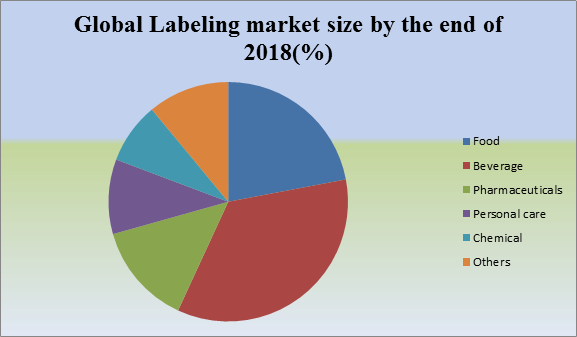
With increasing consumer awareness, labelling marketing size increases exponentially. The global labelling marketing size valued up to USD 5.7 billion in 2018 and is expected to grow at a compound annually at 7.0% between 2019-2025. 

Source- Grandviewresearch.com, 2020

Since consumers are demanding greater productivity amongst the diverse products, This, in turn, has increased the pressure on marketers and labelling marketing contribution to product complexity. In order to meet the demand, producers are looking for versatile labelling units that can accommodate numerous technologies.

Rising demand, accurate measurement and simple labelling solutions fueled up the market demand. In addition to this labelling marketing dispense barcodes and various cartoons packages in the sector.

In terms of end-use, label marketing is characterized by personal care, chemicals, food beverages, and others. As per the grand view research.com, 2019 report, the beverage industry dominated the whole industry as a result of growing disposable income rising trends of healthy drinks. This further boosted the beverage industry fueling the labelling marketing at the end. To know about the beverage industry, take instant assignment help from ArabEssay

Following this food Industry accounted for the second-largest share of Label marketing in 2018. The growth of organic food coupled with the increasing demand of ready to eat mode anticipated favour the growth. Over the forecast period, the Pharmaceutical industry is the third-largest industry has seen investing millions of bucks in informing consumers through labelling. Increased growing population and rising awareness of diseases fueled up even more demand for significant and informative products (Bialkova, and van Trijp, 2010). Various labelling is done with an intention to produce infirmity in the pharmaceutical products Standards including the Labelling and Packaging (CLP) Classification, regulation, and Hazard Communication Standard are likely to influence the positive role.

Formulation And Use Of Quality Standard

Walking down in the isles of grocery stores, when you pick up the product, somewhere on it, there would be nutrition, and ingredients labelling

A recent report of the American Journal of Preventive medicine identified ingredients labelling have influenced consumer choices. After concluding the observation of 2 million users from 11 countries, the report concluded, products manufactured have reduced the intake of calories by 6%, total trans fat by 10.2 % and increase sublimation of vegetables by 13%. Other than unhealthy choices among the respondents is noted 13%. However, there is very less evidence identified labelling choices implicated the carbohydrates, proteins, vitamins, minerals intake. 

When a study was conducted to discover how many consumers were influenced after introducing changes in the products, it was identified; harmful fats in food are reduced by 64% ( Acton, et.al, 2019). Yet overall observation concluded this would have very less effect on consumer choices alternatively don’t impact the calories intake. 

The consumer always tried to work best for themselves and in the simpler way they choose healthier food. The label also appeared on the nudge food companies as they want to reduce the major industrial addictive such as transfat and sodium but don’t affect the industry formulation. 

Few studies have shown available assessing the food label in adding sugars. On that notes food choices does affect the consumer choices who are either diabetes or dealing with pancreases problems. Food labelling also helped in reducing the intake of additional sugar, fat but it was quite clear increasing the total fat has very little impact on health benefits. 

Nutritional knowledge could be very important in many other ways for instance having a direct impact on food choices also impacting their belief to some extent. Also, many essay helpers believed nutrition knowledge and food labels act as a bridge. 

In the US, over 98% of FDA-regulated processed, or packed food has nutritional labels roughly 84% of the European countries labelled food products. Close to Two-third of respondents in the report have made their food choices after recognizing the NFPs. However Miller et.al, 2015 found 78% of the consumer accurately identified the difference in the products, Yet 20% struggling to differentiate the products item list

Apart from that non-addictive food items are containing the most significant information aiding the assessment of food healthiness. Dietary guidelines, 2019 states, ingredients lists are useful to figure out whether the food is containing trans-fats, added sugars, refined or whole grains. FDA recommended the list helping the consumer to get informed. Consequently, health claims are intended to communicate proven health benefits concerning consumption power. For example, a reduction in Trans fibre may help in combating the risk of potential cancer. However claims have been made, the nutritional label has very little impact on product evaluation however comprehensive claim is relatively higher with greater education and experience (Loureiro, et.al, 2010).

How Label Can Impact Marketing

Packaging and labelling design was the first thing that came to light when the consumer first interacted with products. Good labelling mixed with marketing increases brand recognition, productivity, even speaks what is your product about and what it stands for. A great example of it is the juice company nudies, which created their first drink with a unique and clean design. Nudie drink spread all over Australia in food and beverages stores.

Communicative Role of Labeling in Islam

As per the cue utilization theory, consumers use extrinsic factors as arrogance to product quality and consumers are likely to pay close attention to labelling design, packaging, product sustainability’s, health benefits etc. Therefore packaging referred to as extrinsic factors influence perception of taste, company image and in more sophisticated statement symbolizes the connotation.

In Islam, Halal logo certification is most likely to accept facts by Muslims. Many assignment writer said Halal logo  provides number of benefits to the Muslim consumers and marketers. Muslims in non-Muslim countries often seen relies on the Symbol V for vegetarianism that works as an extrinsic factor deem to be suitable products. In a survey, it was identified Arabian and middle east countries citizens spend a considerable amount of money or time seeking out packages having a halal logo or suitable for them to eat. Further, in the absence of a Halal log, respondents tend to go with the screening process through reading product labelling (Khan, 2017). One of the major cues reported from UK samples marked the V symbol as an integral part of labelling designing.

Another communicate role of labelling is it produces embarkation of warning or potential hazard associated with product consumption. Despite the fact that the majority of the respondents have shown a basic understanding of the table of contents, items lists, they would still require more accurate specifications as they search for additional information on the web many times. Thence there is no doubt product labelling largely impact their decision making power. To know more take online assignment help from ArabEssay today.

Conclusion

The purpose of this study is to negotiate the answer whether the product labelling affecting the consumer purchasing power or not. To the best authors knowledge and accounting secondary database, it was identified product labelling came to light only when consumers were willing to pay for it. On the same note, it will be useful to know to what extent, the consumer prefers to recommend products and services being delivered. During this study, it was explored packaging and visual designing plays a vital role in communicating the product benefits at first, but with research progression, study also revealed, labelling symbolize warning like if products contain any hazardous material or not. Since the demand for labelling food has been increased marketing, this study also accumulated data showing the reflection of labelling strategy on business growth.

References

Miller, L.M.S. and Cassady, D.L., 2015. The effects of nutrition knowledge on food label use. A review of the literature. Appetite, 92, pp.207-216.

Shanggun. S and Mozaffarian. D . 2019. Do food and menu nutrition labels influence consumer or industry behavior? Retrieved from https://www.statnews.com/2019/02/19/food-menu-nutrition-labels-influence-behavior/

Acton, R.B., Vanderlee, L., Roberto, C.A. and Hammond, D., 2018. Consumer perceptions of specific design characteristics for front-of-package nutrition labels. Health education research, 33(2), pp.167-174.

Bialkova, S. and van Trijp, H., 2010. What determines consumer attention to nutrition labels?. Food quality and preference, 21(8), pp.1042-1051.

Dan J. Graham, Robert W. Jeffery. Location, Location, Location: Eye-Tracking Evidence that Consumers Preferentially View Prominently Positioned Nutrition Information. Journal of the American Dietetic Association, 2011; 111 (11): 1704-1711 DOI: 10.1016/j.jada.2011.08.005

MSU.2020. Who is Paying Attention to Food Labels? Retrieved from- https://research.msu.edu/paying-attention-to-food-labels/

Khan, Ghazala & Khan, Faiza. 2017. The role of packaging and labelling in determining ‘halalness’: an exploratory study of Muslims in two countries. International Journal of Islamic Marketing and Branding. 2. 85. 10.1504/IJIMB.2017.084807.

Loureiro, Maria & Gracia, Azucena & Nayga, Rodolfo. 2006. Do consumers value nutrition labels?. European Review of Agricultural Economics. 33. 249-268. 10.1093/erae/jbl005.

Grandview research.com,2020. Labeling Machines Market Size, Share & Trends Analysis Report By Technology (Sleeve Labelers, Pressure Sensitive Labelers, Glue-based Labelers), By End Use, By Region, And Segment Forecasts, 2019 – 2025. Available at-https://www.grandviewresearch.com/industry-analysis/labeling-machines-market

Translate »